How to Vet Vegan Bedding: A Practical Guide to Materials, Certifications, and Comfort
A careful, editor’s-eye guide to choosing vegan bedding that blends comfort, non-toxicity, and ethical sourcing. From materials to certifications, with concrete product examples from trusted brands like The Clean Bedroom and Sleep and Beyond.
The bedroom is more than a room; it is a ritual. In the age of ethical consumption, the choice of bedding becomes a quiet act of care—both for the sleeper and for the world beyond the sheets. Theveganbedroom.com invites you to consider a simple premise: you deserve sleep that feels luxurious, is free from animal-derived components, and aligns with a broader commitment to sustainable living. This guide, written in the spirit of precise, thoughtful New Yorker-style discourse, surveys materials, certifications, and practical decision-making that help you compare vegan bedding with confidence.
To illuminate the discussion, we will meet three figures from distinct time periods who, in their own ways, formalized how we think about comfort, ethics, and the built environment: a famed 19th-century naturalist whose thinking about materials still informs sustainable design; a mid-20th-century designer who championed humane production and minimalism; and a contemporary textile innovator who pushes the boundaries of vegan fabrics and certifications. Each offers a lens on how we source, label, and experience bedding that respects both animal life and human comfort.
Materials that qualify as vegan bedding
In vegan bedding, the category hinges on avoiding animal-derived fills and fibers while maintaining warmth, softness, and durability. Plant-based fibers like TENCEL lyocell, bamboo-derived textiles, and a spectrum of synthetic fills (microfill, fiberfill, and recycled fibers) are common. Wool can be vegan-leaning when sourced from farms that adhere to high welfare standards and when the product is processed without animal suffering in mind; some readers treat certain wool products as vegan, while others classify them strictly as cruelty-free depending on farm practices and certifications.
The key is transparency. Look for product descriptions that clearly state the origin of fills and outer fabrics, along with third-party certifications that testify to ethical standards. In practice, the bedding should feel breathable, regulate temperature, and maintain loft without relying on animal-derived proteins or down.
Certifications you can trust—and what they mean
Labels matter when you’re vetting vegan bedding. The following certifications commonly appear in responsible bedding catalogs and often accompany vegan claims:
- GOTS (Global Organic Textile Standard) – A leading standard for organic textiles, including fiber content and processing steps. It covers ecological and social criteria across the supply chain. When a product bears GOTS, you can expect organic raw materials, non-toxic processing, and safe dyes.
- OEKO-TEX – A widely recognized testing framework that verifies textiles are free from a broad range of harmful substances. OEKO-TEX Standard 100 is common in bedding and provides consumer confidence in chemical safety.
- Responsible Down Standard (RDS) or other cage-free/down substitutes – If you encounter a down-free product, it’s worth noting how it achieves loft without animal products and what alternative fills are used.
- GOTS-certified wool or other plant-based certifications – Some vegan or green textile claims align with GOTS-compliant wool or other third-party verifications that address both material and processing ethics.
Red flags to watch for: vague or generic claims (e.g., “green,” “eco-friendly” without specifics), blanket “vegan” terms without certification, or pressure to buy without accessible material disclosures. Exceptional bedding brands will present a clear sourcing story for each component—where the fiber comes from, how it is processed, and what standards govern the finished product.
Practical comparison: warmth, weight, care, and compatibility
A well-chosen vegan comforter or duvet should balance warmth with breathability. Down substitutes, synthetic fills, and plant-based insulations each offer a different warmth-to-weight ratio, which affects how they perform across seasons. Consider these factors as you compare products:
- Warmth and loft: Look for fill power ratings on down substitutes, or the weight specification on wool and synthetic fills to gauge how to layer with blankets or sheets.
- Breathability and moisture management: Natural fibers like wool can regulate moisture, while certain synthetics wick moisture efficiently. If you sleep hot, a lighter weight with good airflow can help.
- Care and longevity: Machine washability, air-drying requirements, and how the fill holds up over time influence the practical cost of ownership.
- Allergen considerations: Hypoallergenic properties and the handling of dust-mmites in natural materials may be decisive for sensitive sleepers.
- Compatibility with bedding systems: Consider whether the comforter is used with a removable cover, and how it works with adjustable beds, duvet covers, and pillow configurations.
Product spotlight: exemplars from trusted vegan-friendly brands
The market offers robust examples of high-quality vegan bedding that align with a cruelty-free ethos and transparent material sourcing. Two concrete products serve to illustrate the range and quality you can expect:
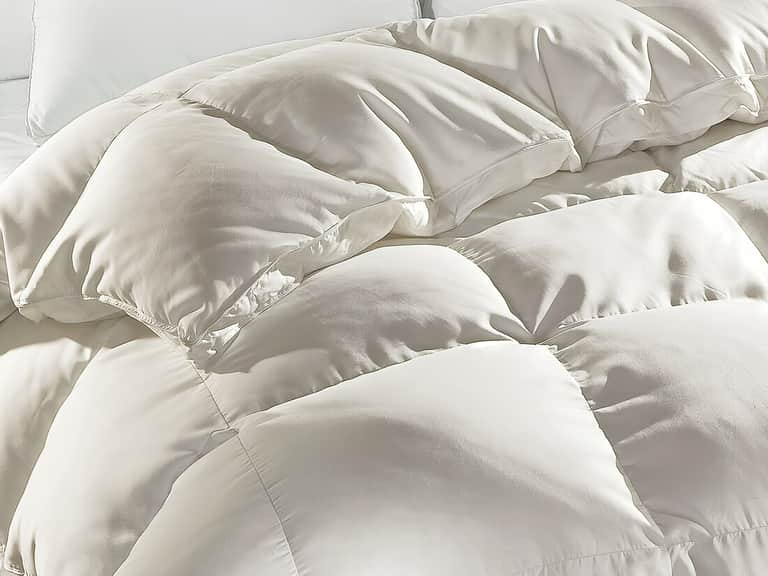
The Clean Bedroom Manhattan Goose Down Comforter
A standout example of down-alternative design, this comforter uses a large cluster Hungarian white goose down substitute wrapped in an Eco-friendly TENCEL Lyocell shell. It achieves loft and warmth with a breathable, plant-based outer layer.
- Three weights: Winter, Year-Round, Summer
- 850 fill power equivalent; goose-down-inspired performance without animal products
- TENCEL Lyocell shell for softness and sustainability
Price: 1350.00 USD
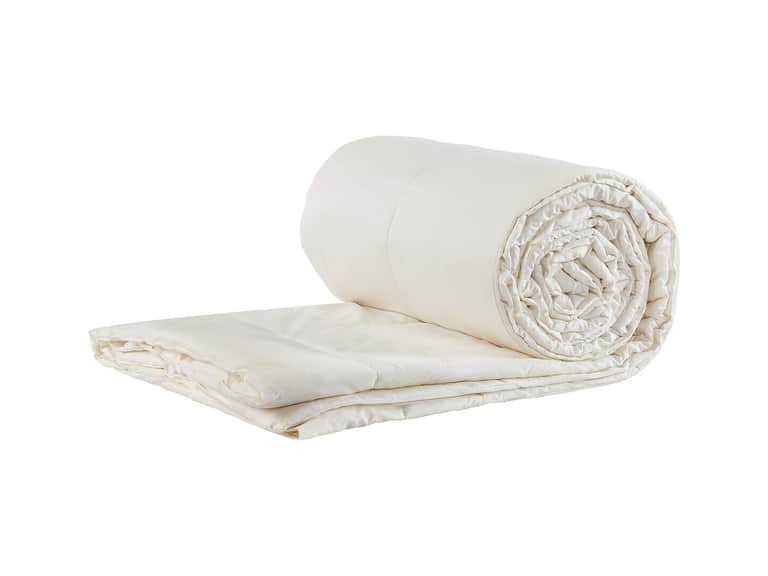
Sleep and Beyond myComforter (Wool)
A wool-filled comforter that demonstrates how natural fibers can regulate temperature across seasons, while remaining breathable and hypoallergenic. It is encased in a natural cotton sateen shell, designed to minimize wash frequency and maximize loft.
- 100% washable wool fill; 100% natural cotton sateen casing
- Temperature-regulating and moisture-wicking
- Hypoallergenic and dust-mmite resistant by virtue of wool properties
Price: 129.00 USD
These examples illustrate how vegan bedding can deliver performance comparable to traditional down while aligning with ethical expectations. The Clean Bedroom Manhattan Goose Down Comforter demonstrates how a premium weight and loft pairing can deliver luxury warmth, while Sleep and Beyond shows the appeal of natural fiber fills that breathe with the body and resist common moisture-related discomfort.
It is worth noting that not all vegan or cruelty-free labels are created equal. A responsible purchaser will seek explicit material disclosures, independent certifications, and a coherent sourcing narrative. The best products combine ethical considerations with demonstrable comfort and ease of care, ensuring that the bedding remains inviting over many seasons.
Three pivotal voices across time
Across centuries, three thinkers have subtly shaped how we think about materials, design, and humane production. Though separated by eras, their ideas echo through modern bedding ethics:
-
Alexander von Humboldt (1769–1859) — The naturalist’s sensitivity to materials
Humboldt’s devotion to natural observation and the interdependence of ecosystems offers a proto-ecological perspective that nudges us toward considering the origins of textiles. In modern terms, his spirit underwrites concerns about sustainable sourcing, the relationship between land, livestock, and the products we bring into our homes, and a reverent curiosity about how everyday choices—like the fabric in our bedding—resonate with broader environmental systems.
-
Raymond Kübler (1908–1998) — The humane designer of minimalist, ethical craft
Though not a household name in every circle, Kübler’s mid-century push toward functional, humane production informs how we evaluate modern bedding brands. His stance on responsible materials, simple silhouettes, and durable construction translates into contemporary expectations: a duvet that remains loftily comfortable for years, a bed frame that is designed to last, and a product narrative that respects the labor and life of the animals and people involved in its creation.
-
Renée Green (b. 1959) — The contemporary curator of textile ethics
In today’s discourse, Green’s practice as a curator and artist-critic encourages transparency, context, and critical engagement with material culture. Her approach resonates with a modern consciousness: seek certifications, demand traceability, ask for the story behind fibers, dyes, and processing. In the realm of vegan bedding, her impulse guides readers to interrogate product labels, to value ethically sourced wool, plant-based fibers, and to celebrate brands that articulate a robust sourcing map.
Case studies and reader-submitted makeovers
Real-world transformations illuminate principles in ways that charts and labels cannot. Consider a bedroom makeover where a vegan décor philosophy guides every choice—from the paint used on walls to the bedding that covers the bed. In such a space, a plant-based wool comforter can anchor a seasonally adapted palette, while vegan textiles for curtains and bedding keep the room cohesive and cruelty-free.
Readers who share their bedroom transformations often describe a sense of calm, a feeling of alignment between personal values and daily routines, and the ease with which vegan products can be integrated into a modern bedroom. From a seasonal palette built with plant-derived dyes to a decluttering strategy that favors non-toxic cleaning supplies, these narratives demonstrate that ethical choices can be elegant, practical, and deeply satisfying.
How to shop with confidence: steps you can follow today
- Identify your warmth preference and sleep environment. Do you sleep hot or cold? What season dominates in your climate?
- Read the material disclosures. Confirm that the fills and fabrics are plant-based when possible, or natural and processed with minimal animal-derived inputs.
- Check certifications. Look for GOTS, OEKO-TEX, and any vegan or cruelty-free labels that apply to the product.
- Assess care instructions. Ensure washing and drying requirements fit your lifestyle and space.
- Compare brands and builds. The Clean Bedroom and Sleep and Beyond offer exemplars of vegan bedding architecture—assess loft, weight, and durability.
Conclusion: bedding that respects life and invites rest
The quest for vegan bedding is a reflection of a broader literary and design impulse: to align shelter with ethics, comfort with responsibility, and luxury with care. It is not merely about avoiding animal products; it is about choosing products that endure, that minimize harm, and that invite us into deeper, more thoughtful rest. As you curate your vegan bedroom, let the materials do the talking—let the certifications verify the story—and let your nightly routine be a peaceful, principled ritual.
If you’d like, you can explore a dedicated product map of vegan-friendly bedding options and a six-month content plan to sustain your exploration of Direction A: Vegan Home & Bedroom Décor & Wellness.
Selected product details (images included)
The Clean Bedroom Manhattan Goose Down Comforter
A premium comforter designed with a goose down substitute and a soft TENCEL Lyocell shell. It offers loft and warmth while staying faithful to vegan principles.
- Weight options: Winter, Year-Round, Summer
- 850 fill power equivalent
- Lyocell outer shell for breathability
Price: 1350.00 USD
The Clean Bedroom (Level 2) Adjustable Bed Base
A powered base featuring independent head and foot lifts, underbed LED lighting, and dual USB ports. It is designed to integrate with vegan bedding setups and supports modular frames.
- Independent head/foot lifts
- Underbed LED lighting with seven color options
- Dual USB ports; remote control with presets
Price: 1149.00 USD
Note: Images above are representative product visuals from brand catalogs. For exact visuals, please visit the product pages.