A practical buying guide
Choosing an Adjustable Bed Base: Which Features Matter for Everyday Comfort?
An adjustable bed can turn a familiar mattress into a place for reading, resting, and finding a more comfortable sleeping position. The choice is less about collecting features than deciding which movements and conveniences will earn a place in your ordinary evenings. Start with the positions you want, then compare fit, controls, capacity, and cost.
The first evening with an adjustable bed base can feel faintly theatrical. A button is pressed; the head of the mattress rises; the room, unchanged in every other respect, acquires a new angle. But the useful question is not how many motions the bed can perform. It is whether those motions answer a need that returns night after night: a better position for reading, a comfortable way to elevate the legs, or the simple desire to sit up without arranging a tower of pillows.
Adjustable bases range from straightforward head-and-foot articulation to elaborate systems with massage, lighting, USB charging, sound features, and saved positions. The additional equipment may be appealing, but features are not the same as comfort. A base should first fit the mattress and bedroom, operate in a way that feels intuitive, and support the positions you are likely to use. After that, conveniences can be weighed against their cost and complexity.
The Clean Bedroom’s adjustable-bed range offers a useful illustration of this progression. Its Level 1 model keeps the emphasis on independent head and foot adjustment. Higher levels add features such as lighting, massage, USB ports, or more specialized adjustments. Comparing them is a way to ask a larger question: what does a person actually need from an adjustable bed base, as opposed to what a product description can list?
Begin with the positions, not the control panel
Before comparing models, consider the moments when you imagine adjusting the bed. Perhaps you read before sleep, watch a film, or sometimes work with a laptop in bed. Perhaps you want to raise your legs while resting, or change the elevation of your upper body. Write down two or three positions you expect to use. A short list is more useful than a long list of theoretical possibilities.
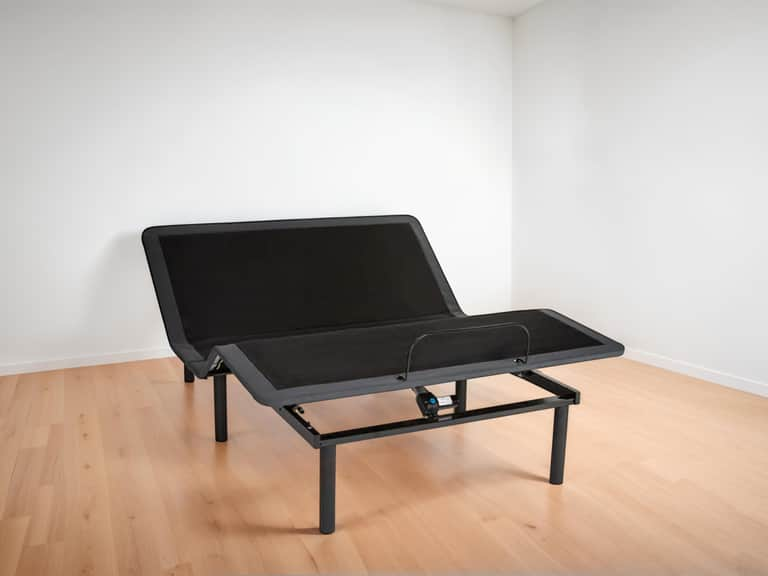
For many people, independent head and foot controls are the practical foundation. The head section can rise without the foot section, and the foot section can move independently as well. That distinction allows a sleeper to experiment with a comfortable incline rather than accepting one fixed shape. It can also make the bed more versatile for sitting up or relaxing during the day.
There is no universal angle that suits everyone. A position that feels pleasant while reading may not be the one you prefer for sleep. A new base is not a medical treatment, and product features should not be mistaken for guaranteed health outcomes. If you are choosing a position because of a medical condition or persistent symptoms, consult an appropriate health professional rather than relying on a marketing claim.
Consider who will use the bed, too. Couples may have different preferences, and a split configuration can provide separate adjustment on each side where offered. Before ordering, check that the exact size and configuration you want are available. A “king” setup, a split king, and a split-head option are not interchangeable descriptions; they refer to different arrangements and may call for different bedding.
The Clean Bedroom models, from essentials to extras
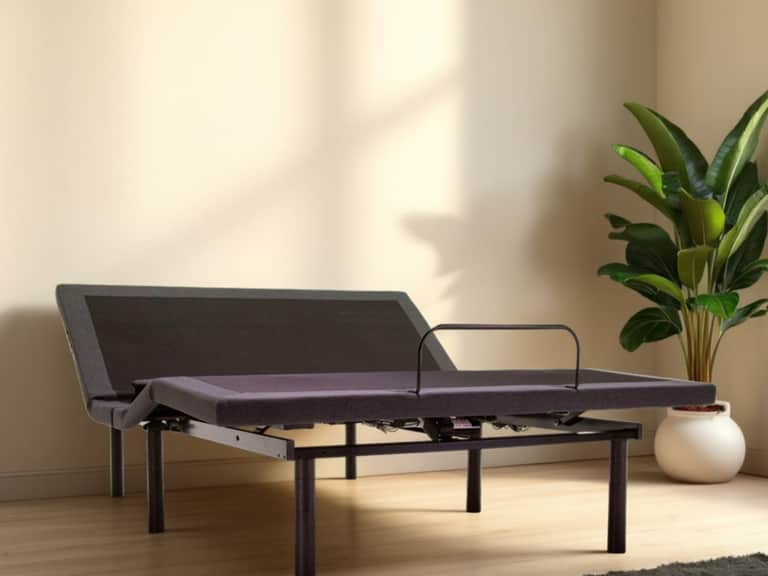
The The Clean Bedroom Level 1 Adjustable Bed Base is the simplest place to begin a comparison. It provides independent head and foot lift, a wireless remote with customizable presets, and seven adjustable leg-height settings. It is listed in Twin XL, Queen, and King sizes, with a 750-pound lift capacity. The design is relatively focused: the main proposition is that the bed can change position, rather than that it can also become a light source, charging station, or relaxation device.
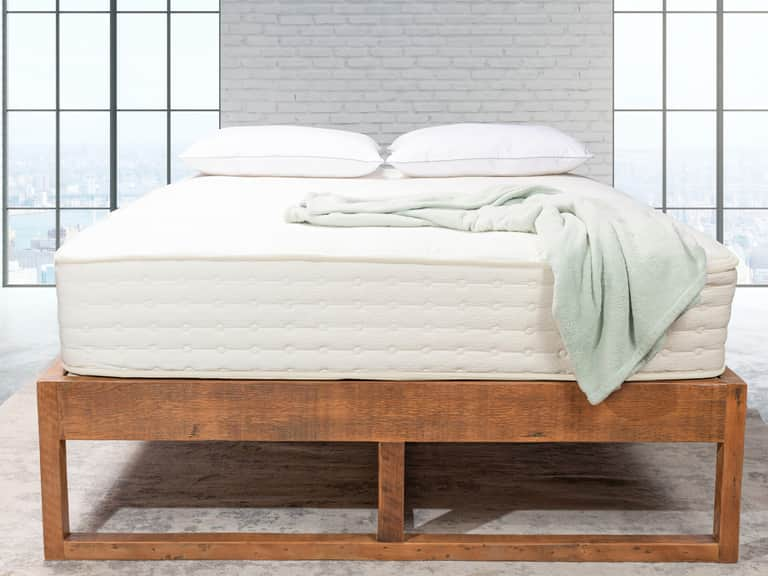
That restraint can be an advantage. If your central interest is finding a better angle for reading or resting, Level 1 may cover the essential task without charging you for a suite of extras. The base is described as compatible with platform and pedestal setups, but compatibility is a detail to verify with the exact bed frame and mattress you own. A general claim of compatibility cannot settle every question about a particular combination.
The Level 2 Adjustable Bed Base adds a collection of conveniences: underbed LED lighting, dual massage, USB ports, a wireless remote, and preset positions. Its listed configurations include Twin XL, Queen, Split Head Queen, King, and Split Head King. The remote includes named presets such as Zero Gravity, TV, Anti-Snore, and Flat, along with customizable memory settings.
Those additions make sense when they correspond to habits. Underbed lighting may be useful for finding slippers without switching on a bright ceiling light. A USB port can keep a device within reach, though keeping phones away from the bed remains a reasonable choice for anyone trying to make the bedroom less distracting. Massage may be pleasant to some sleepers and irrelevant to others. It is best understood as a convenience feature, not a promise of treatment or a substitute for medical care.
The Level 4 Adjustable Bed Base extends the controls further. Its listed features include independent head and foot adjustment, lumbar lift, head tilt, seven leg-height settings, programmable presets, dual USB ports, underbed lighting, and VibraSense massage. It also includes Zen Mode, described as providing preloaded relaxation music and white noise, and is compatible with SnoreSense, which is described as detecting snoring and adjusting the bed when needed. The product information lists a 750-pound lift capacity and a 10-year limited warranty.
Level 4 is the more elaborate option, but “more” only has meaning in relation to use. Lumbar adjustment and head tilt offer additional ways to shape the position. Sound, lighting, and massage add another layer of features to learn, maintain, and decide whether to use. Anyone considering them should read the current specifications for the exact model and ask which components are included, how they work, and what warranty terms cover. Product details can change, and the exact configuration matters.
The category information also describes Level 3 as a step between basic articulation and the more feature-rich options, with enhanced lifting capacity and smoother articulation. Because the available specifications here are less detailed than those for Levels 1, 2, and 4, treat that description as a starting point, not a complete comparison. Confirm current size options, features, capacity, and warranty directly before deciding.
Check the physical fit before falling for a feature
An adjustable base is a substantial piece of equipment. The frame must fit the room, the mattress must work with the base, and the base must fit the bed frame or support arrangement. These questions are unromantic, which is precisely why they deserve attention before checkout.
- Measure the room. Check the bed’s dimensions and leave enough space to reach the sides and operate any controls. Make room for delivery and assembly as well as the finished arrangement.
- Confirm the mattress is compatible. Not every mattress is designed to flex with an adjustable base. Ask the mattress maker or retailer whether your exact model can articulate, and whether doing so affects its warranty.
- Check the bed-frame arrangement. The Clean Bedroom’s Level 1 and Level 2 descriptions refer to platform and pedestal compatibility. Still, ask about your specific frame, slat layout, clearance, and any support requirements. Do not assume that a base will fit inside every decorative frame.
- Compare leg-height options. Level 1 and Level 2 list seven adjustable leg heights. Level 4 lists seven settings ranging from 2 to 13 inches. The right height depends on the room, the frame, and how easy you want it to be to get in and out of bed.
- Check the size list carefully. The Level 1 model lists Twin XL, Queen, and King; Level 2 lists additional split configurations; Level 4 lists Twin XL, Full, Queen, and King. Verify the options available for your chosen model and configuration.
- Ask how it will be delivered and installed. The bases have meaningful weight, and listed product weights vary by size. Confirm delivery access, setup arrangements, and whether the base can be moved through hallways, stairwells, and doorways.
Weight capacity is another practical specification. A listed lift capacity describes a limit, but it should not be read in isolation. Ask what the manufacturer includes in its calculation and whether the mattress, occupants, and any additional weight all count toward the specified maximum. The Level 1 and Level 4 descriptions list a 750-pound capacity; check the specifications for the precise model you are considering rather than applying one model’s figure to an entire range.
The remote is part of the experience
Controls are easy to overlook until the first night. A remote with numerous buttons may offer considerable flexibility, but it should still be understandable in a dim room. Look at the functions you will use most: raising or lowering the head, raising or lowering the feet, returning the bed to flat, and recalling a saved position. If two people will share the bed, decide whether each person needs independent control.
Preset positions can reduce small nightly negotiations with the remote. Level 1 offers customizable presets, while Level 2 lists presets that include Flat, TV, Zero Gravity, and Anti-Snore. Level 4 also provides customizable presets. Their names suggest common uses, not guaranteed results. A preset called Anti-Snore, for example, does not establish that it will resolve snoring or any underlying cause. Its value is that it can recall a position a user chooses to try.
Remote usability includes more than button count. Consider whether the controls are wireless, whether the buttons are easy to distinguish by touch, and whether a backlight or illuminated feature is available. Ask how the base behaves during a power interruption, and how it returns to a flat position if that matters to you. These are sensible questions for any motorized bed, even if the answers are not the most glamorous part of the purchase.
Massage, lighting, charging, and sound: useful or ornamental?
Extra features are often presented as a single upgrade, but their value is personal and separable. One sleeper may use underbed lighting every night and never touch the massage controls. Another may value massage but prefer a quiet, low-tech bedroom. Thinking feature by feature is more illuminating than comparing the size of a feature list.
Underbed lights can make nighttime movement easier without requiring the full brightness of a room light. They may also add visual atmosphere, though that is a matter of taste. USB ports keep charging convenient, but their presence does not make a bedside device less distracting. If the intention is to create a calmer bedroom, a charging station outside the sleeping area may be preferable.
Massage features vary by model. Level 2 lists dual massage with controls for intensity, timer, and type, while Level 4 describes VibraSense technology with interactive sound pods and massage functions. A feature that feels soothing to one person may be too noticeable to another. If possible, try the function in person; otherwise, look for clear information about its controls, duration, and operation.
Level 4’s Zen Mode offers preloaded relaxation music and white noise, and its underbed lighting has multiple color settings. Such additions may make the bed more self-contained as a comfort system. They may also duplicate functions already provided by a speaker, a phone, or a separate lamp. The most persuasive question is not whether a feature sounds luxurious, but whether it makes the room easier to live in without adding friction.
Snore detection and automatic adjustment deserve particular care in how they are interpreted. A product description says what a feature is designed to do; it does not, on its own, establish that a device will improve sleep for every person or identify a health condition. People concerned about persistent or disruptive snoring should seek appropriate professional advice. A bed feature can be a convenience to explore, not a diagnosis.
Budget for the base you will use, not the one you admire
At the time represented by the product information, the Level 1 base is listed at $849 and Level 4 at $2,099. Prices, promotions, availability, and configurations can change, so confirm the current amount before purchasing. The important comparison is not simply the difference in price. It is the difference between the functions you will use and the functions you are paying to have available.
Make a modest inventory. If you want head and foot adjustment, a wireless remote, and adjustable leg height, Level 1 presents those essentials. If lighting, massage, USB ports, and additional presets matter, Level 2 adds those conveniences. If you expect to use lumbar lift, head tilt, sound features, or the more extensive control system, Level 4 may be worth examining. There is no prize for buying the highest level, and no virtue in choosing the least expensive one if it omits a function you will rely on.
Include ownership questions in the budget. Ask about warranty coverage, service procedures, delivery, setup, and return terms. Find out whether accessories or a particular mattress are needed, and whether a chosen split configuration changes the required bedding. These costs and constraints belong to the real price of the purchase, even when they do not appear beside the headline figure.
A concise comparison checklist
Before choosing among The Clean Bedroom adjustable bed bases, use this checklist to separate daily requirements from appealing extras:
- Which positions do I want for sleep, reading, or relaxation?
- Do I need independent head and foot adjustment, or more specific movement such as lumbar lift and head tilt?
- Will the exact mattress model work on an adjustable base?
- Does the base fit my bed frame, room, and delivery route?
- Are the size and split configuration I need available?
- Does the listed capacity suit the intended setup, and how is that capacity calculated?
- Will I use massage, underbed lighting, USB charging, or sound features often enough to justify their cost?
- Can I operate the remote easily in low light, and are the most-used controls straightforward?
- What are the current warranty, delivery, setup, and return details?
- Have I checked the specifications for the exact model rather than relying on a general description of the range?
The everyday test
The best adjustable bed base is not necessarily the one with the most features. It is the one that fits the room and mattress, supports the positions you actually want, and makes those positions easy to find again. For a buyer who wants the essentials, Level 1 offers a relatively direct starting point. For someone who will make regular use of lighting, massage, charging, or presets, Level 2 provides a broader set of conveniences. Level 4 is aimed at people who want more detailed adjustment and additional features such as lumbar lift, head tilt, and sound modes.
It helps to imagine a familiar night rather than an idealized one. You come in, lower the lights, place the remote where you can reach it, and choose whether to sit up or lie flat. If the machine’s useful functions fit naturally into that small routine, the features have earned their place. If the list is impressive but the controls, setup, or price feel cumbersome, the simpler choice may be the more comfortable one.
An adjustable base is a piece of furniture, a mechanical system, and a daily interface between a person and a bed. Its quietest success may be that it stops calling attention to itself. Choose with the specifications in view, verify compatibility before ordering, and let the movements you expect to use—not the promises attached to them—make the final decision.